
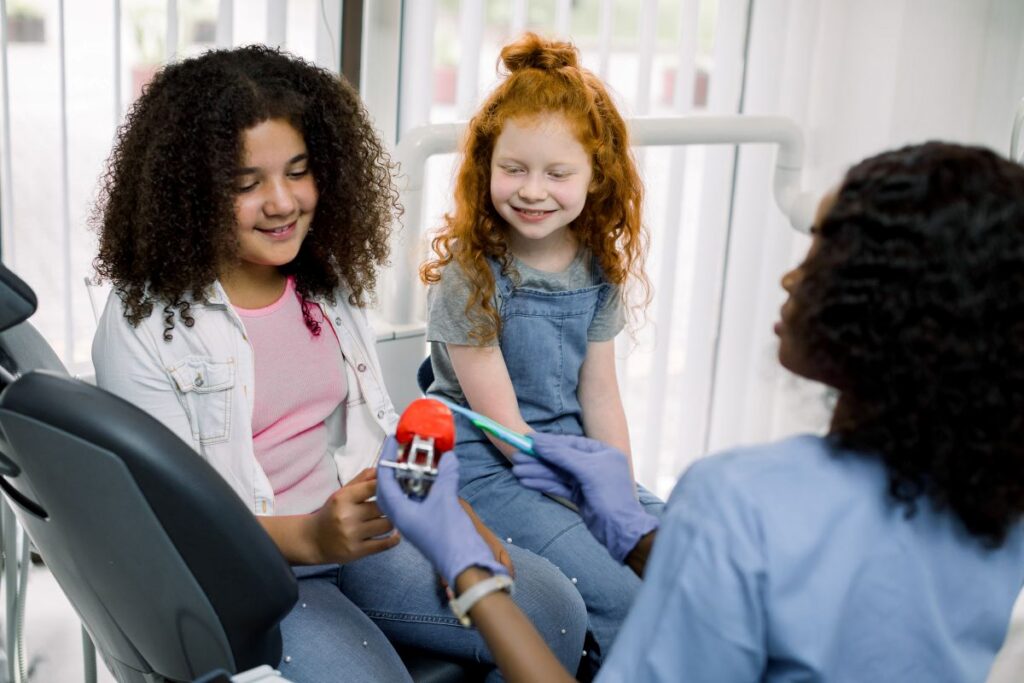
Choosing a pediatric orthodontist and figuring out when your child actually needs braces can feel more complicated than it should. Here’s a straightforward look at what a pediatric orthodontist does, when kids typically start treatment, what options exist, and what the process actually looks like from a first visit onward.
What Does a Pediatric Orthodontist Do?
A pediatric or children’s orthodontist focuses specifically on how kids’ teeth and jaws develop over time, not just on straightening teeth once they’ve all come in. That means evaluating growth patterns, spotting issues early, and timing treatment to work with a child’s natural development rather than against it. Some cases call for early intervention well before all the adult teeth arrive, while others are better handled once more permanent teeth are in place.
What Age Should Kids Get Braces?
There isn’t one single answer, since it depends on what’s going on with a specific child’s teeth and jaw. The American Association of Orthodontists recommends a first orthodontic evaluation by age 7, mainly so a growth-related issue can be caught early if one exists. That doesn’t mean every 7-year-old needs braces. Many kids are monitored for a few years before any treatment starts, while others benefit from early guidance during that younger window. For a deeper look at that early evaluation and what it involves, see our guides on when your child should first see an orthodontist and early orthodontic treatment.
For kids who don’t need early intervention, standard braces treatment more often starts once most permanent teeth have come in, typically somewhere in the tween to early teen years.
Common Types of Braces for Kids
Once a child is ready for active treatment, there are a few different options depending on their case, their teeth, and personal preference:
- Traditional metal braces. The most common and typically the most budget-friendly option.
- Ceramic braces. Tooth-colored brackets for kids or teens who want a less visible option. See our full guide to ceramic braces.
- Self-ligating braces, like Damon. Use a built-in clip instead of elastic ties, which some kids find more comfortable. Read more about Damon braces vs. traditional braces.
- Invisalign. Removable clear aligners, best suited for kids and teens responsible enough to wear them consistently. See Invisalign vs. braces for a full comparison.
How Much Do Braces for Kids Cost?
Cost varies widely depending on the type of braces, how long treatment takes, and how much correction is needed, so it’s not something we think is honest to quote as a single number without seeing your child’s specific case. What we can say is that early intervention, when it’s genuinely needed, often reduces the complexity (and sometimes the cost) of treatment later on, since it takes advantage of a child’s natural growth rather than correcting a more established issue afterward. For general pricing context, see our complete guide to braces costs in San Jose.
What to Expect at Your Child’s First Orthodontic Visit
A first visit usually includes a conversation about your child’s dental and growth history, an exam, and often 3D imaging to get a clear picture of tooth position, jaw development, and bite alignment. From there, we’ll walk you through whether treatment is needed now, whether it makes sense to monitor and revisit in a year or so, or whether it’s simply too early to say anything meaningful yet. There’s no pressure to start treatment before it’s actually useful.
Choosing a Pediatric Orthodontist in San Jose or Los Gatos
Since a lot of pediatric orthodontic care is about judgment and timing rather than a fixed formula, it’s worth choosing a practice with real experience treating kids specifically, not just a general orthodontist who occasionally sees younger patients. Our doctors treat kids and teens across all three of our offices in San Jose and Los Gatos. You can learn more about our team on our doctors page or find the office nearest you on our locations page.
Frequently Asked Questions
What’s the difference between a pediatric orthodontist and a regular orthodontist?
Both can treat children, but a practice with real pediatric experience is more likely to catch growth-related issues early and know when to treat versus when to simply monitor a developing bite.
What age should my child get braces?
It depends on the individual case. The AAO recommends a first evaluation by age 7, but active treatment might start then, several years later, or not require early intervention at all. A consultation is the only reliable way to know.
How much do braces cost for kids?
Cost depends on the type of braces and the complexity of treatment needed. A consultation is the best way to get an estimate specific to your child’s case.
Are braces painful for kids?
Most kids experience some mild soreness for a few days after braces are placed or adjusted, but it’s not typically described as painful in an ongoing way. Over-the-counter pain relief is usually enough if needed.
Can my child get Invisalign instead of braces?
Often yes, depending on the case and whether your child is responsible enough to wear removable aligners consistently. It’s worth discussing at a consultation.
Does insurance cover braces for kids?
Many dental insurance plans offer at least partial orthodontic coverage for children. Coverage varies significantly by plan, so it’s worth checking with your provider directly.
Schedule a consultation to find out what your child’s specific case needs, whether that’s early guidance now or simply a plan for later.