
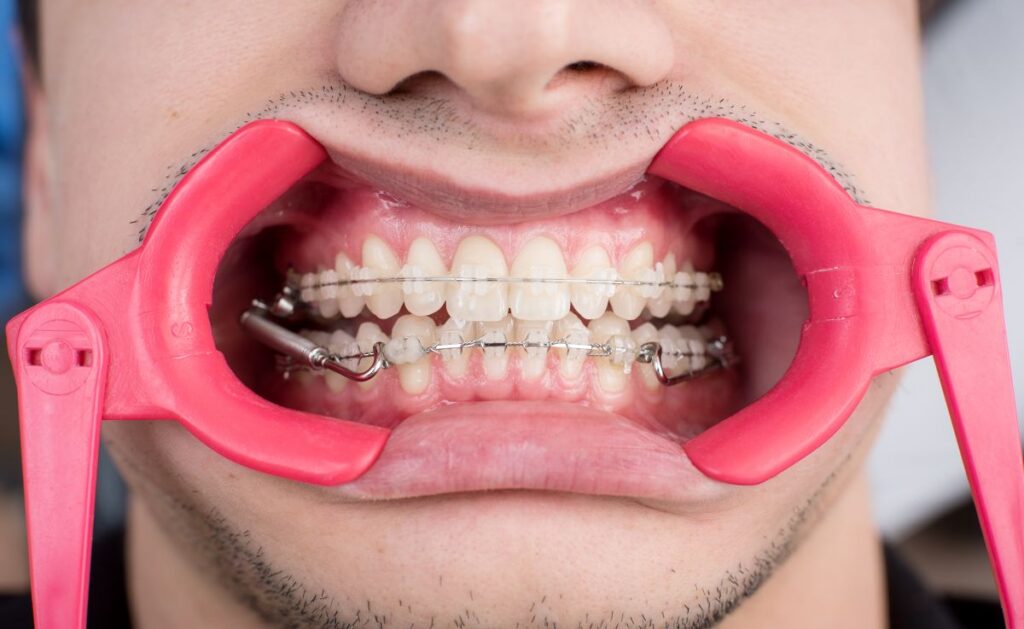
Self-ligating braces are a type of braces that hold the wire in place using a built-in clip or door on each bracket, instead of the small elastic bands (ligatures) used with traditional braces. The core idea, moving teeth gradually with brackets and a wire, is the same as any other braces. The difference is in how the wire attaches, and that small mechanical change has a few real, practical effects on treatment.
How Self-Ligating Braces Work
With traditional braces, a small elastic tie wraps around each bracket to hold the wire in place. Those ties need to be replaced at every adjustment appointment, and they can stretch or discolor between visits. Self-ligating brackets use a tiny built-in clip instead, so the wire clicks into place without any elastic at all. This reduces friction between the wire and bracket, which allows teeth to move more freely as they shift into position.
Self-Ligating vs. Traditional Braces
Both systems use brackets and a wire, and both can treat the same range of bite and alignment issues. Where they tend to differ:
- No rubber bands or ties. Self-ligating brackets clip directly onto the wire, so there’s nothing to replace at each visit and less for food or plaque to catch on.
- Lower friction. Reduced friction between the wire and bracket can make tooth movement more efficient in many cases.
- Fewer or shorter adjustment visits. Some self-ligating systems require less frequent wire changes, which can mean fewer appointments over the course of treatment.
- Bracket size. Self-ligating brackets are often slightly larger than traditional ones because of the built-in clip mechanism, though modern designs have gotten smaller over time.
Benefits of Self-Ligating Braces
The most noticeable day-to-day benefit for most patients is simply not having elastic ties to deal with. Ties can trap food, stain between visits, and occasionally snap, none of which happens with a self-ligating clip. Many patients also report that self-ligating systems feel a bit more comfortable overall, since the lower-friction design generally means gentler, steadier pressure rather than the stronger forces sometimes used with traditional elastic-tied braces.
Self-Ligating Braces Cost
Self-ligating braces typically cost somewhat more than basic traditional metal braces, largely because of the bracket technology itself. In many cases the difference is modest, and it’s often offset by needing fewer adjustment visits over the course of treatment. As with any orthodontic treatment, the real cost depends on your specific case, so a consultation is the only way to get a number that actually applies to you. For general pricing context across treatment types, see our complete guide to braces costs in San Jose.
Damon Braces: A Popular Self-Ligating System
Damon braces are one of the most widely used self-ligating systems, and they’re a large part of what we do here. If you’re deciding between a self-ligating system and traditional braces, our detailed comparison, Damon Braces vs. Traditional Braces: Which Is Right for You?, walks through the specifics of cost, comfort, and treatment time in more depth than a general overview like this one can.
Are Self-Ligating Braces Right for You?
Self-ligating braces are a solid option for most patients who would otherwise be considering traditional metal braces. They’re not a different category of treatment so much as a more refined version of the same mechanics. If appearance is your main concern rather than the tie mechanism, it’s also worth looking at ceramic braces, since self-ligating brackets are available in ceramic as well as metal. A consultation is the best way to know which combination of options fits your specific bite and goals.
Frequently Asked Questions
What does “self-ligating” mean?
It means the bracket holds the wire in place with a built-in clip or door, rather than a separate elastic tie. Self-ligating simply refers to how the bracket secures the wire, not a different treatment approach altogether.
Are self-ligating braces faster than traditional braces?
In some cases, the lower friction design allows teeth to move a bit more efficiently, which can mean a modestly shorter treatment time. This varies by patient and by how much correction is needed.
Do self-ligating braces hurt less?
Many patients report a bit more comfort with self-ligating systems, since they typically use gentler, more consistent pressure. Some soreness after adjustments is still normal with any type of braces.
How much do self-ligating braces cost?
They generally cost somewhat more than basic traditional metal braces, though the difference is often modest and can be partly offset by needing fewer adjustment visits. Exact cost depends on your specific case.
What’s the difference between Damon braces and self-ligating braces?
Damon is a specific, widely used brand of self-ligating braces. All Damon braces are self-ligating, but self-ligating is the general category, and other brands and systems also use the same clip-based mechanism.
Do self-ligating braces require fewer appointments?
Often yes. Since there are no elastic ties to replace, some self-ligating systems allow for slightly longer gaps between adjustment visits, though your orthodontist will set a schedule based on your specific treatment plan.
Schedule a consultation to find out whether a self-ligating system like Damon braces is the right fit for your treatment plan.