
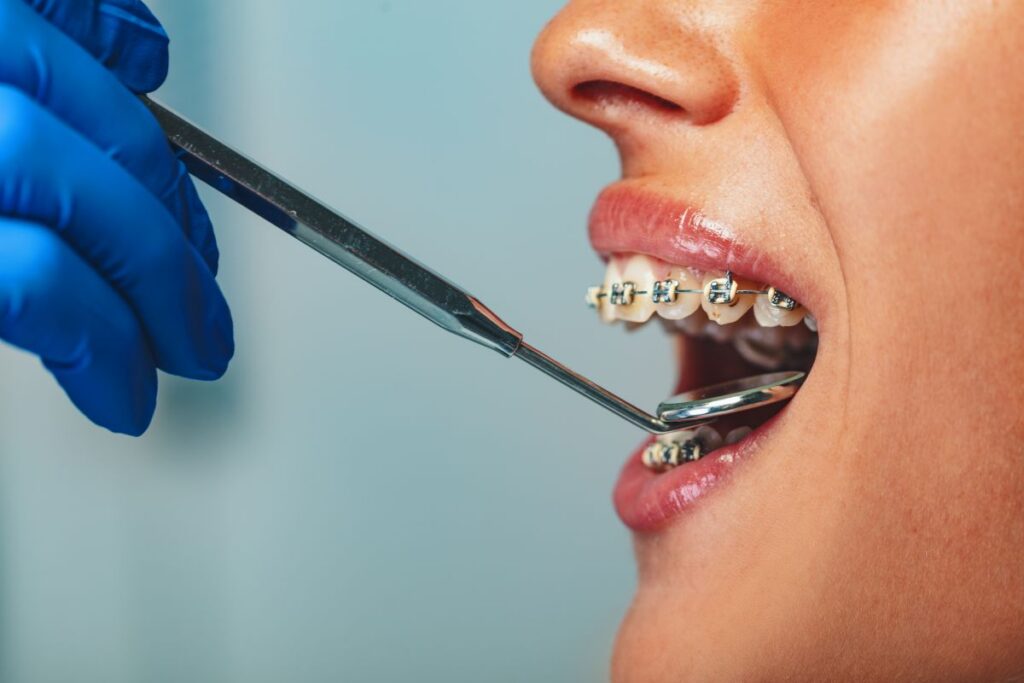
Ceramic braces work the same way traditional metal braces do, using brackets and wires to gradually move your teeth into place. The difference is cosmetic: the brackets are made from a tooth-colored or clear ceramic material instead of metal, so they blend in much more with your natural teeth. For patients who want the reliability of traditional braces without the visible metal look, ceramic is often the middle ground between traditional braces and Invisalign. It’s one of several orthodontic treatment options we offer, alongside Invisalign and self-ligating Damon braces.
What Are Ceramic Braces?
Ceramic braces use brackets made from a tooth-colored composite material rather than stainless steel. The wire that connects the brackets is often still metal, though thinner and less noticeable than what’s used with traditional braces. Some patients combine ceramic brackets on the upper teeth, which show more when smiling or talking, with metal brackets on the lower teeth, where durability matters more and visibility is less of a concern. If you’re also weighing a self-ligating option, see our guide to Damon braces vs. traditional braces.
Ceramic vs. Metal Braces: What’s the Difference?
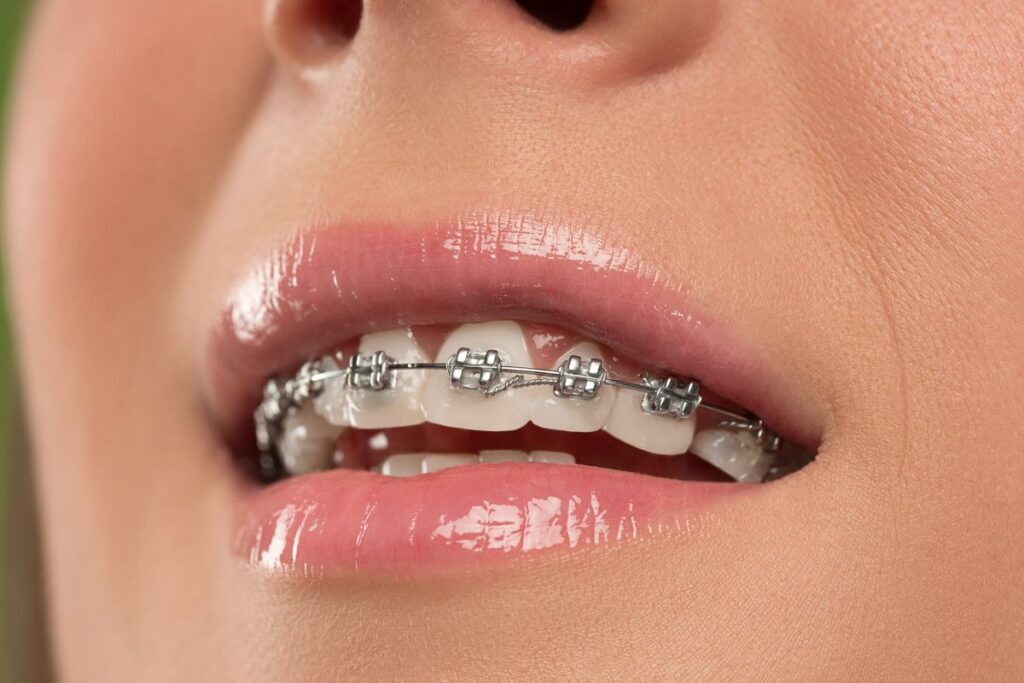
The core treatment process is identical. Both use brackets and wires, both require periodic adjustments, and both can treat the same range of orthodontic issues, including crowding, spacing, and bite problems. The differences come down to appearance, cost, and a few practical trade-offs.
- Appearance. Ceramic brackets are far less noticeable, especially from a distance. Metal brackets are visible but have gotten smaller and less bulky than older designs.
- Cost. Ceramic braces typically cost somewhat more than traditional metal braces because the material itself is more expensive and can be more delicate to work with.
- Durability. Metal brackets are more resistant to chipping and staining over the course of treatment. Ceramic brackets, while sturdy, are more prone to picking up stains from certain foods and drinks if oral hygiene isn’t kept up.
- Friction. Metal brackets and wires typically create less friction during tooth movement, which can occasionally mean marginally faster treatment in some cases, though this varies by patient.
How Much Do Ceramic Braces Cost?
Ceramic braces generally cost more than traditional metal braces but are often comparable to or slightly less than Invisalign, depending on the complexity of your case. The exact cost depends on how much correction is needed, how long treatment will take, and whether ceramic is used on all teeth or just the upper arch. Because every case is different, the most accurate way to get a number that applies to you is a consultation, where we can look at your specific bite and give you a real estimate rather than a generic range. For a broader look at pricing across treatment types, see our complete guide to braces costs in San Jose.
Are Ceramic Braces Worth It?
That depends on what you’re optimizing for. If looking less noticeable during treatment matters more to you than the modest cost difference, ceramic braces are a popular and effective choice. If cost is the primary concern and you’re comfortable with visible brackets, traditional metal braces accomplish the same result for less. Many patients find ceramic worth it specifically because it lets them keep the reliability of fixed braces (versus needing to remember to wear removable aligners) while looking less obvious day to day.
Do Ceramic Braces Stain?
The brackets themselves resist staining reasonably well, but the elastic ties that hold the wire in place can pick up color from foods and drinks like coffee, tea, red wine, and curry, especially between adjustments. Good oral hygiene and being mindful of strongly pigmented foods and drinks go a long way toward keeping ceramic braces looking clean throughout treatment.
Ceramic Braces for Adults
Ceramic braces are a common choice for adult patients specifically because of the appearance factor. Many adults returning to orthodontic treatment after years without braces are looking for something that fits into a professional or social setting more comfortably than traditional metal brackets, without giving up the predictability of fixed braces the way removable aligners sometimes require.
What to Expect During Treatment
Getting ceramic braces follows the same process as traditional braces: an initial consultation and imaging, a fitting appointment where the brackets are bonded to your teeth, and regular adjustment visits every several weeks to gradually guide your teeth into their final position. Day-to-day care is also similar, with attention paid to brushing thoroughly around each bracket and avoiding foods that are especially hard, sticky, or heavily pigmented.
Frequently Asked Questions
What are ceramic braces made of?
The brackets are made from a tooth-colored ceramic composite material, while the connecting wire is typically still metal, though thinner and less visible than with traditional braces.
Are ceramic braces more expensive than metal braces?
Generally yes, ceramic braces cost somewhat more than traditional metal braces due to the material and the extra care required to work with it. The exact difference depends on your specific treatment plan.
Do ceramic braces stain?
The brackets themselves resist staining well, but the elastic ties holding the wire can pick up color from foods and drinks like coffee, tea, and red wine between adjustments.
Can adults get ceramic braces?
Yes, ceramic braces are a popular option for adult patients who want a less visible alternative to traditional metal braces while keeping the predictability of fixed braces.
How do ceramic braces compare to Invisalign?
Ceramic braces are fixed to your teeth for the full course of treatment, while Invisalign uses removable clear aligners. Ceramic tends to be less visible than metal braces but more visible than Invisalign, and cost between the two varies by case. For a fuller comparison, see Invisalign vs. braces.
Do ceramic braces take longer than metal braces?
Treatment time is primarily determined by your specific bite and how much correction is needed, not the bracket material. Any difference in treatment length between ceramic and metal is typically minor.
Once your braces come off, retention matters just as much as treatment did. Read our guide on how to clean and care for your retainer to help your results last.
Schedule a consultation to find out whether ceramic braces are the right fit for your case, and get a cost estimate specific to your treatment plan.