
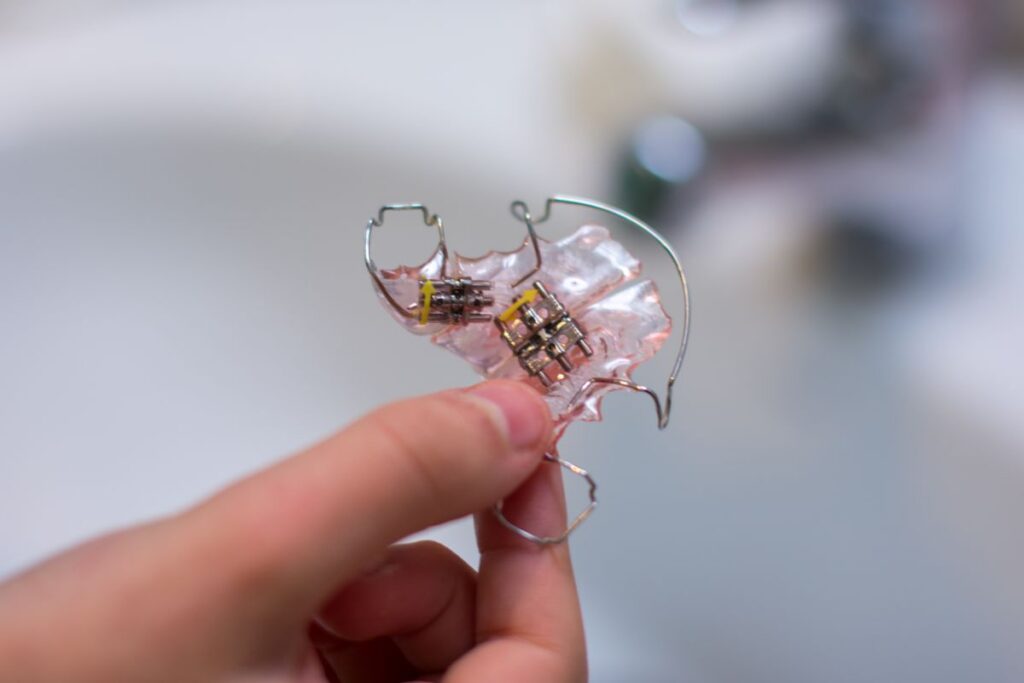
A retainer only works if you actually wear it, and it only stays wearable if you take care of it. Whether you just finished braces, wrapped up Invisalign, or you’ve had the same retainer for years, cleaning it properly matters more than most people realize. A dirty retainer isn’t just unpleasant. Bacteria and plaque build-up can cause bad odor, staining, and in some cases even gum irritation. The good news: proper care takes just a couple of minutes a day.
Daily Cleaning: What to Do Every Time You Take It Out
Your retainer picks up saliva, plaque, and food particles every time you wear it, the same way your teeth do. A quick daily routine keeps it from building up into something harder to remove later.
1. Rinse Immediately
Rinse with cool or lukewarm water as soon as you take it out, before saliva and plaque have a chance to dry onto the surface.
2. Brush Gently
Use a soft toothbrush with a small amount of mild liquid soap or a non-abrasive cleaner. Avoid toothpaste, which is too abrasive and can scratch the surface.
3. Rinse & Store
Rinse again and store it in its case. Never wrap it in a napkin or leave it loose in a pocket or bag, since that’s the #1 way retainers get lost or damaged.
Deep Cleaning: Disinfecting a Few Times a Week
Brushing removes visible debris, but it doesn’t fully disinfect. A few times a week, give your retainer a deeper clean using one of these methods:
- Retainer cleaning tablets (like Retainer Brite or a similar denture/retainer cleaner). Dissolve in water per the package instructions and soak for the recommended time, usually 15–20 minutes.
- Diluted white vinegar. A mix of equal parts white vinegar and water makes a simple, effective at-home soak. Rinse thoroughly afterward since vinegar has a strong smell and taste.
- Distilled water soak. For a gentler option, an extended soak in plain distilled water helps loosen buildup before brushing.
A Note on Baking Soda
A light baking soda paste can help with mild staining, but use it sparingly and gently. Like toothpaste, it’s mildly abrasive, and overuse can dull a clear retainer’s surface over time.
What NOT to Do
A surprising number of retainers get damaged by well-intentioned cleaning habits. Avoid these:
- Hot water. Never use hot or boiling water, since it can warp the plastic and permanently change the fit.
- Toothpaste. Most toothpaste is abrasive enough to create tiny scratches, which trap more bacteria over time and cloud clear retainers faster.
- Mouthwash soaks. Many mouthwashes contain alcohol and dyes that can discolor or dry out retainer material.
- Bleach or harsh chemicals. These can break down the material and are not safe to put in your mouth afterward, even after rinsing.
- Dishwasher or washing machine. Yes, people try this. The heat and pressure will destroy it.
Clear (Invisalign-Style) Retainers vs. Traditional Retainers
If you have a clear, removable retainer, the kind that looks similar to an Invisalign tray, it needs slightly more careful handling than a traditional wire-and-acrylic (Hawley-style) retainer. Clear plastic scratches and clouds more easily, which is exactly what makes it look “foggy” over time. Stick to gentle brushing, avoid abrasive pastes entirely, and lean on tablet or distilled-water soaks rather than scrubbing to keep it looking clear for as long as possible.
How Long Does a Retainer Last?
With good care, a retainer typically lasts one to several years, though it will show wear eventually. Clouding, loosening, or small cracks are all signs it’s time for a replacement. If you’re finding yourself needing replacements more often than you’d like, ask us about our retainer subscription program, which keeps you consistently supplied with a fresh retainer without having to schedule a separate replacement visit each time.
Frequently Asked Questions
How often should I clean my retainer?
Rinse and brush it every time you take it out, and do a deeper disinfecting soak a few times a week. Daily upkeep prevents the buildup that makes deep cleaning harder later.
Can I use toothpaste to clean my retainer?
It’s best to avoid it. Most toothpaste is mildly abrasive, which can create tiny scratches that trap bacteria and cloud clear retainers over time. A mild liquid soap or a dedicated retainer cleaner is a better choice.
Can I clean my retainer with vinegar?
Yes. A soak of equal parts white vinegar and water is a common, effective at-home method. Rinse thoroughly afterward to remove the taste and smell before wearing it again.
How do I clean a clear or Invisalign-style retainer?
Handle it more gently than a traditional retainer, since clear plastic scratches and clouds easily. Stick to soft brushing with mild soap and occasional tablet or distilled-water soaks, and avoid abrasive pastes.
Why does my retainer smell bad?
Odor is usually a sign of bacterial buildup from saliva and plaque that hasn’t been fully cleaned off. A consistent daily rinse-and-brush routine, plus regular deep-cleaning soaks, should resolve it.
Is it safe to use retainer cleaning tablets every day?
Most cleaning tablets are formulated for regular use, but check the specific product’s instructions. A few times a week is typically enough alongside your daily brushing routine.
Schedule a visit if you have questions about your retainer or you’re ready to ask about our retainer subscription program.